

The Velocity Saga

Shadows of Medusa: Velocity Saga Book One
On a mission to establish humanity’s first foothold on Mars, biologist Anna Schweitzer and her small crew face the ultimate test of survival. Far from home and cut off from reliable support, they must contend with the harsh realities of the Red Planet and the growing realization that someone may want them to fail.
Available in Paperback and eBook Formats

Medusa Rising: Velocity Saga Book Two
With the first Mars base struggling to survive, the story shifts focus to those pulling the strings back on Earth – and to an isolated, desperate survivor on the Red Planet. As hidden agendas collide and new threats emerge, the line between ally and enemy blurs. Despite the best efforts of an unlikely new champion, treachery runs wild.
Now Available in eBook Format

Tetrahedron: Velocity Saga Book Three
As their protection fades, supporters of the fractured Mars mission endure direct attacks with disastrous consequences. Data engineer Kate Gunn pursues answers about a high-profile aircraft explosion, only to be drawn into a dangerous new alliance that could reshape humanity’s future. Assisted by a furry friend, David infiltrates the enemy’s organization, walking a razor’s edge between discovery and betrayal as he undermines their plans from within.
Coming Soon in eBook Format
An Insider’s Guide to The Velocity Saga (spoiler alert)
What begins as a desperate struggle to keep the first human outpost alive on Mars slowly reveals itself as something far larger – an ancient game of survival, control, and hidden knowledge that reaches across planets and, eventually, across the stars themselves.
The series opens with a tightly focused story of survival and secrecy on the Red Planet (Shadows of Medusa). It then shifts its center of gravity to Earth in Medusa Rising, exposing the political and institutional machinery that both enables and endangers the Mars effort. The third novel, Tetrahedron, expands the canvas again, asking questions that no longer fit inside a single solar system.

A Deliberate Design Choice in Book Two
Medusa Rising was written with a specific long-term goal in mind. A reader can start with Book 2 and experience it as a complete, self-contained story. Later, after reading Shadows of Medusa, that same reader can return to Medusa Rising and discover an entirely different narrative – one reshaped by new knowledge and hidden connections.
In effect, Book 2 functions as two distinct reading experiences: a shorter novel that can stand alone, and a second, richer version that only appears after the first book has been absorbed. The result is a kind of “free story” built into the structure of the series.
Where the Larger Vision Came From
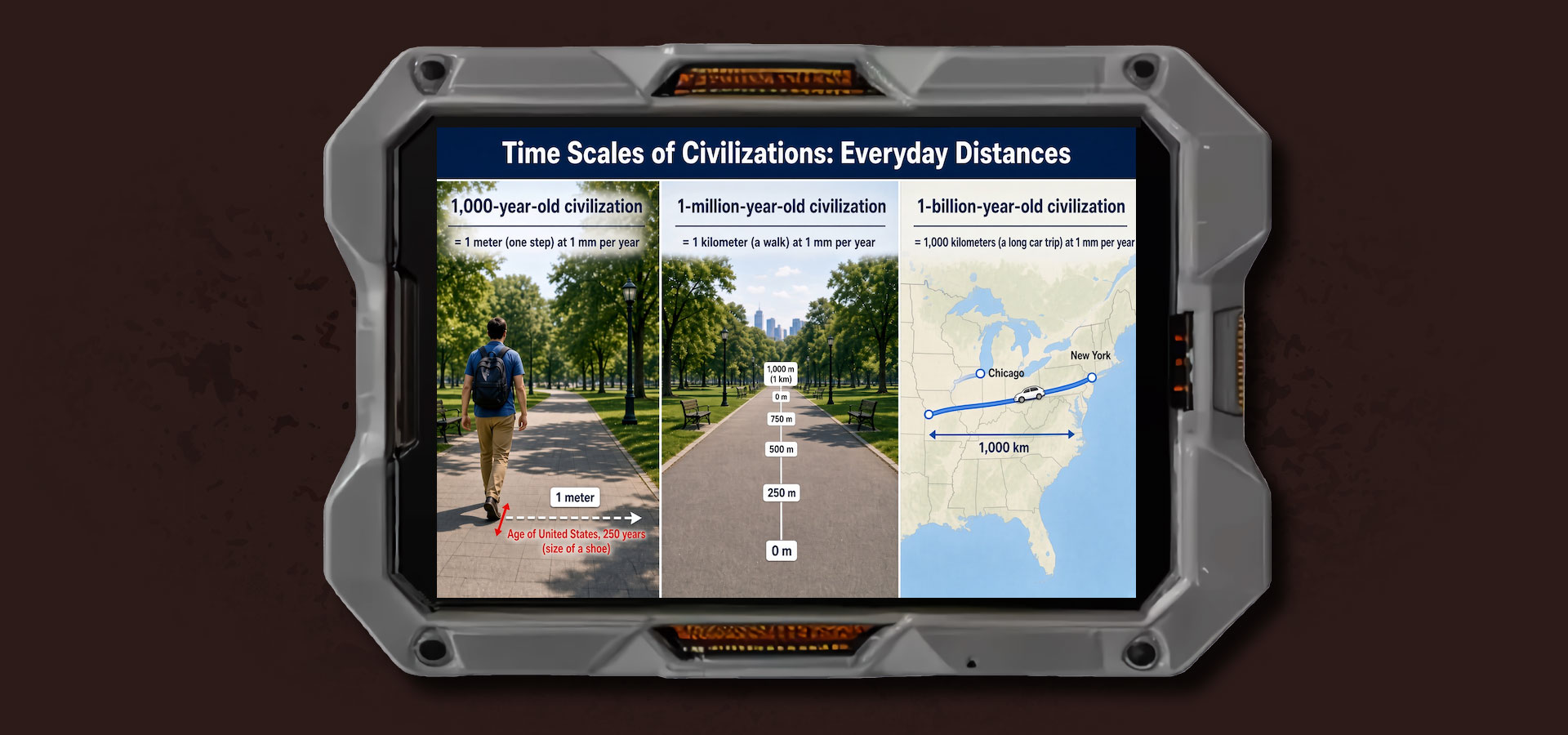
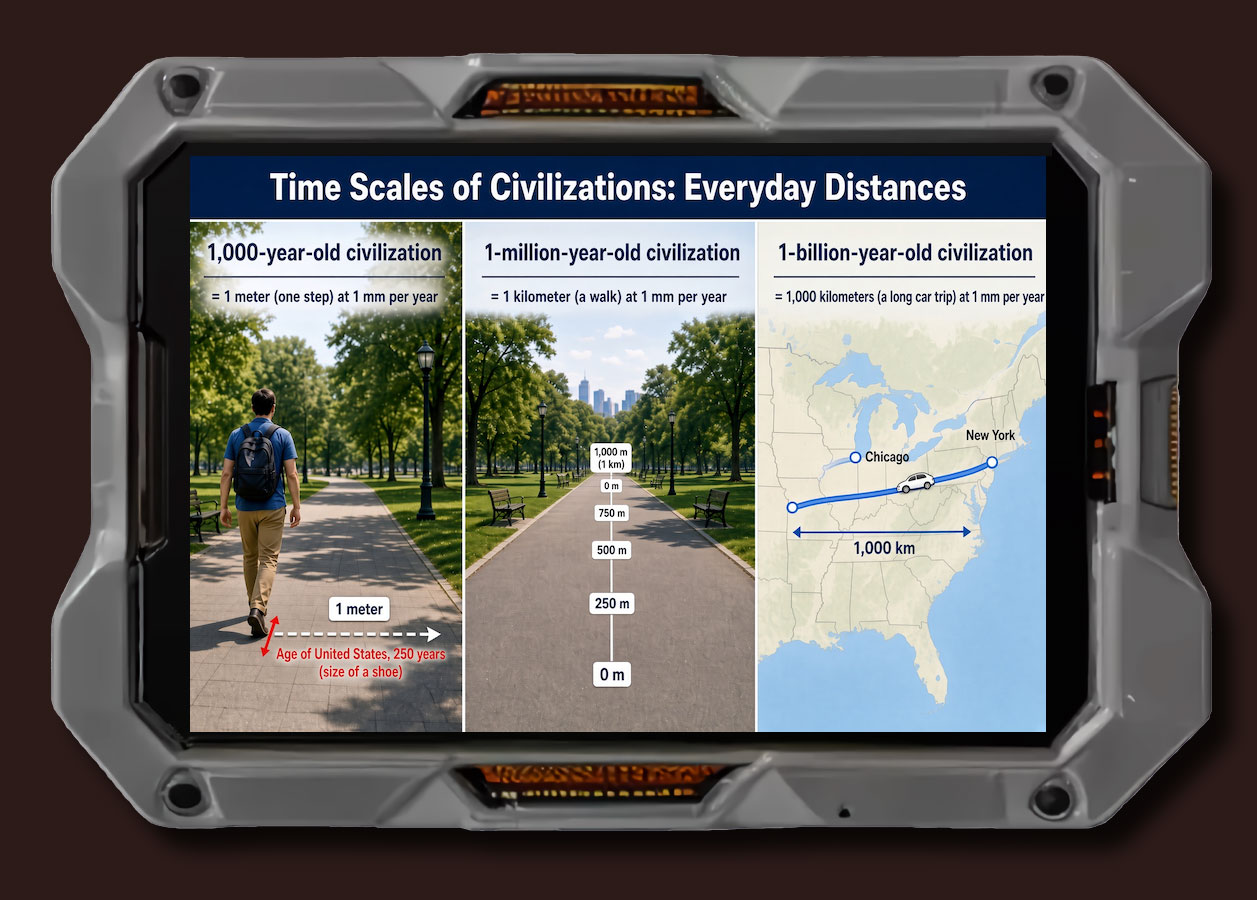
The deeper architecture of the saga grew out of a conversation in the early 2000s with J. Michael Straczynski (JMS), the creator of Babylon 5 and the figure fans still call the Great Maker. Straczynski posed a deceptively simple question: What would a civilization a billion years old look like, and what would it actually worry about?
That question became a quiet engine for The Velocity Saga. Tetrahedron begins to probe the fundamental principles that govern the universe itself – physical forces such as gravity, velocity, and energy; the nature of sub-atomic reality; the tension between central control and individual freedom; and the future of conflict on scales far beyond anything human history has known. These are not abstract philosophical puzzles. They are the kinds of concerns an ancient intelligence would treat as practical matters of survival.
The same question also reframes the Fermi Paradox. If a civilization has existed for a billion years, it could easily extinguish a million-year-old one, and it could crush a thousand-year-old civilization before that younger species ever truly left its home world. Does something vastly older and more patient lurk in the shadows of our modern world, bending human nature toward its own goals?
Characters and Stakes
The people who carry this story are not traditional action heroes. They are scientists who understand the true cost of every decision made on Mars; data engineers, historians, and philosophers who notice patterns others dismiss; journalists who begin asking questions that powerful institutions would prefer remain unasked; and operatives who must weigh institutional loyalty against the survival of the mission itself. Their choices play out against two very different stages: the fragile, high-stakes environment of the first Martian base, and the more opaque corridors of power on Earth. As the series progresses, the stage grows larger still, forcing these characters to confront questions that reach beyond any single planet or political system.
The Velocity Saga remains grounded in realistic science and engineering – even as it acknowledges that a billion-year-old intelligence might understand how to work within (or around) the physical constraints we currently take as absolute. It is a story about ordinary people discovering how far they are willing to go – and what they might awaken – when the future of humanity among the stars is no longer theoretical.
Whether you begin with Book 1 or Book 2, the series is designed to reward both the first reading and the return visit. The questions are timeless, and the answers troubling, if not terrifying.